

Carbon Credits

Carbon Credits: Turning Sustainability into Opportunity

Empowering a Greener Future Through Carbon Credits

At Sayali Green Energy, we believe that a sustainable future begins with responsible energy choices. Carbon credits offer businesses and organisations an opportunity to support climate action by encouraging measurable reductions in greenhouse gas emissions.

By promoting renewable energy adoption, energy efficiency, and sustainable practices, carbon credit mechanisms can help create environmental value while supporting the transition towards a low-carbon economy.

Take a step towards a cleaner, greener, and more sustainable future with Sayali Green Energy.

How Do Carbon Credits Work?

Carbon credits connect verified emission-reduction activities with organisations seeking to address their carbon footprint.

  1. Identify Emission-Reduction Opportunities: Explore opportunities through renewable energy, energy efficiency, waste management, and other eligible climate-friendly initiatives.
  2. Measure Environmental Impact: Establish an appropriate emissions baseline and quantify the reductions, removals, or avoided emissions achieved by the project.
  3. Validate and Verify: The project must meet the applicable methodology and eligibility requirements, with the required validation, monitoring, and independent verification.
  4. Obtain Carbon Credits: Eligible projects may receive carbon credits after successful assessment and approval under the relevant programme or standard.
  5. Trade or Retire Credits: Issued credits may be transferred, sold, or retired according to the applicable market rules, supporting climate strategies and investment in emission-reduction initiatives.


Carbon Credits in India

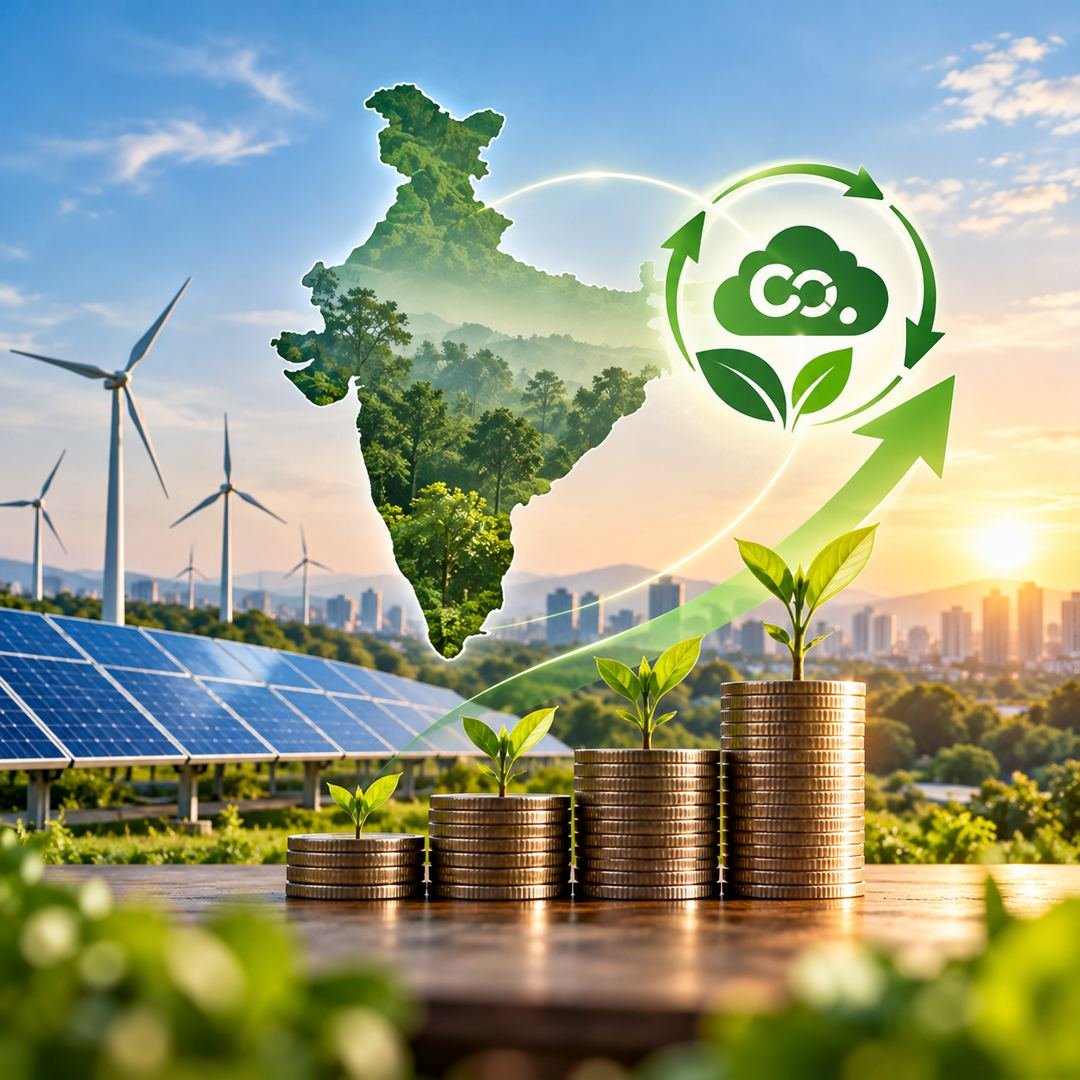
  • India is developing its carbon market through the Carbon Credit Trading Scheme (CCTS), which provides a framework for carbon credit trading and greenhouse gas emission reductions.
  • The framework includes a compliance mechanism for designated entities and an offset mechanism under which eligible projects can seek carbon credit certificates, subject to prescribed requirements.
  • This evolving market creates opportunities for organisations to explore emission-reduction projects and understand how their sustainability initiatives may fit within the applicable framework.
  • Businesses should assess project eligibility, current regulatory requirements, approved methodologies, and verification procedures before making carbon credit investment or revenue projections.

Who Can Benefit from Carbon Credits?

Carbon credits can be relevant to a wide range of organisations and project developers, including:

Sustainable Project Developers

Projects focused on eligible waste management, afforestation, and other climate-related activities.

Commercial and Industrial Establishments

Facilities exploring energy efficiency and emission-reduction initiatives.

Renewable Energy Project Developers

Eligible solar and other clean energy projects seeking opportunities within applicable carbon markets.

Businesses and Industries

Organisations working to measure, monitor, and effectively reduce their carbon footprint.

Organisations with Climate Goals

Businesses looking to complement direct emissions reductions with credible carbon market instruments.

Frequently Asked Questions

What is a carbon credit?

A carbon credit is a tradable certificate representing a specified quantity of greenhouse gas emissions reduced, removed, or avoided. Under many carbon market systems, one credit represents one metric tonne of CO₂ equivalent.

Some solar energy projects may qualify to generate carbon credits, depending on the applicable programme, approved methodology, additionality requirements, and verification process.

Eligible projects may generate revenue by selling issued credits. Actual returns depend on verified emission reductions, project costs, credit quality, market demand, and applicable rules.

Are carbon credits and renewable energy certificates the same?

No. Carbon credits generally represent quantified greenhouse gas emission reductions, removals, or avoidance. Renewable energy certificates represent the environmental attributes associated with renewable electricity generation. They serve different purposes and are governed by different rules.

Begin by assessing your energy use and emissions, identifying potential reduction projects, and evaluating the relevant carbon market requirements. Professional guidance may help determine eligibility, documentation needs, and the next steps.

Carbon credits can create a meaningful connection between climate responsibility and economic opportunity. By investing in cleaner energy and exploring credible emission-reduction initiatives, organisations can contribute to a more sustainable future.

Discover smart, sustainable and energy-efficient solar solutions tailored to your needs. Take the next step towards clean energy, reduced electricity costs and a greener future with Sayali Green Energy.

Get in touch with us today to find the right solar solution for your home or business.