

Solar Cold Room Solutions

Solar Cold Room Solutions

Keep Your Produce Fresh with Solar-Powered Cooling

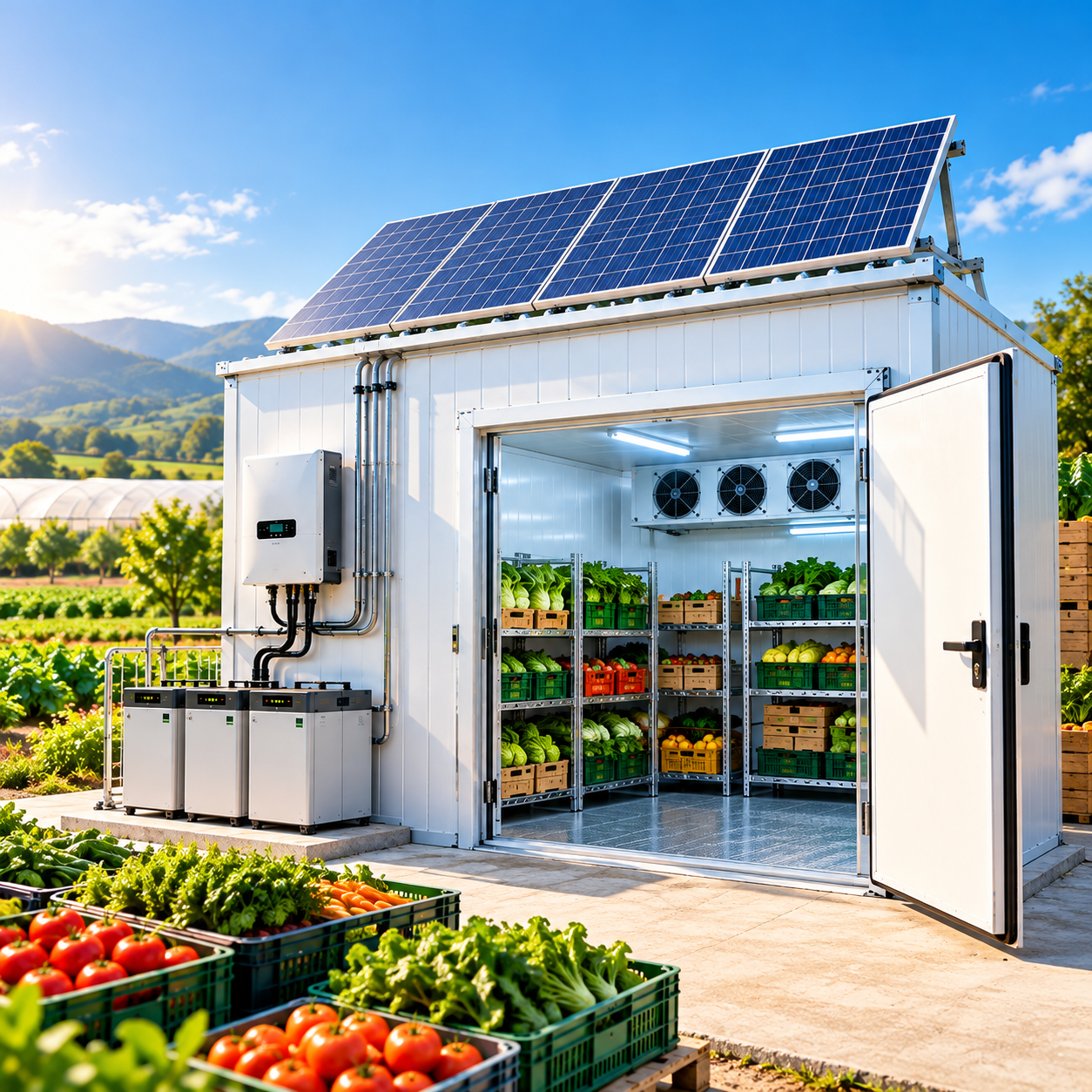
Preserve freshness, reduce energy costs, and support sustainable agriculture with Solar Cold Room Solutions by Sayali Green Energy Solutions. Designed for the storage of perishable agricultural produce, solar cold rooms use solar energy to support temperature-controlled storage and help reduce dependence on conventional electricity.

Whether you are a farmer, agricultural business owner, food distributor, or producer, a solar cold room can help maintain produce quality after harvesting, minimise post-harvest losses, and improve storage efficiency. Harness the power of the sun to create a more sustainable and cost-conscious cold storage solution for your business.

Power Your Cold Storage with Clean Energy.

How Does a Solar Cold Room Work?

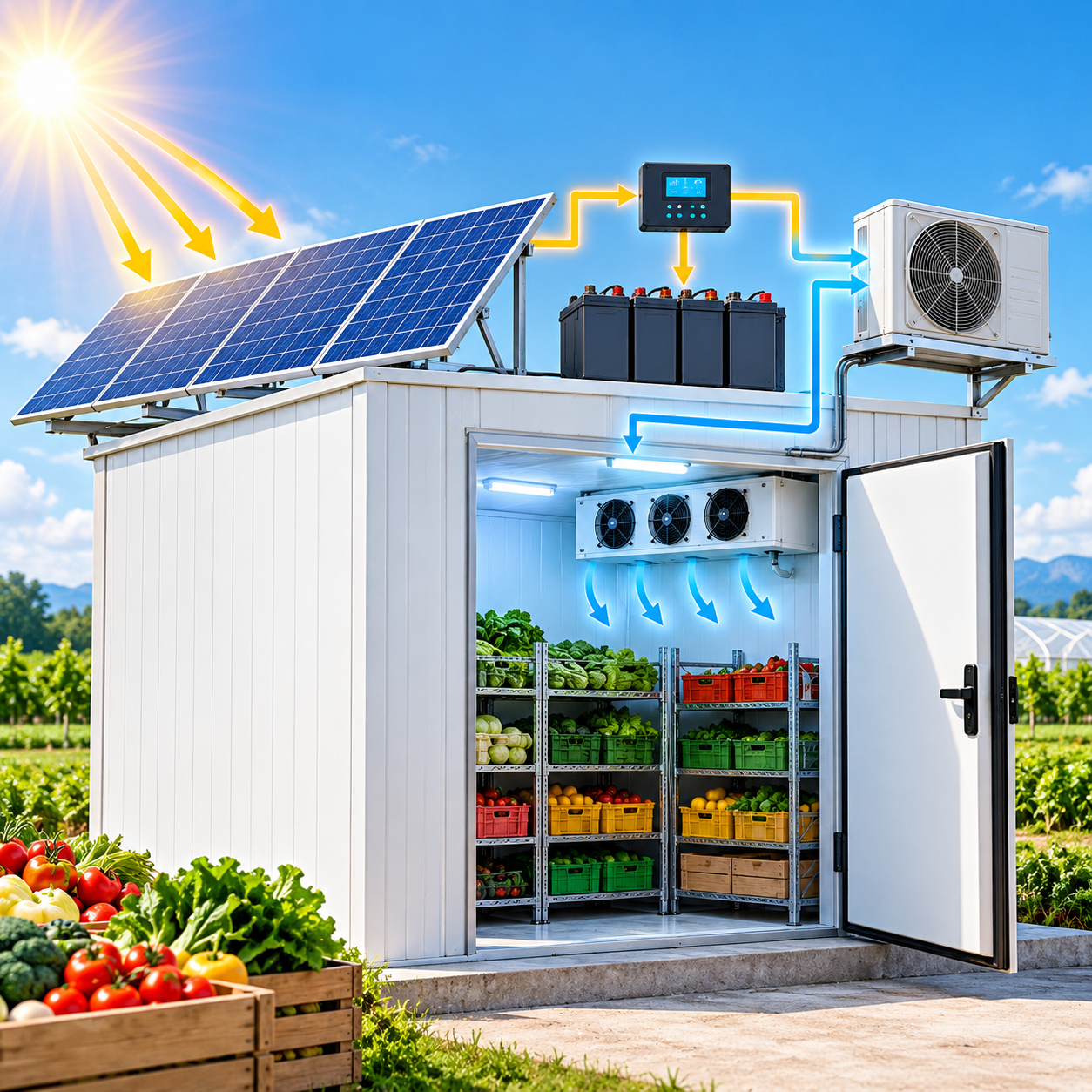
A solar cold room combines solar energy generation with refrigeration and insulated storage to maintain the required temperature.

  1. Solar Power Generation: Solar panels convert sunlight into electricity to supply power to the system.
  2. Refrigeration and Cooling: The refrigeration unit removes heat from the insulated storage chamber and maintains the selected temperature.
  3. Temperature Management: Appropriate controls monitor and regulate cooling to help maintain the required storage conditions.
  4. Backup and Energy Management: Depending on the selected configuration, grid power, battery storage, or thermal energy storage may help support operation during low-sunlight periods.
  5. Safe Produce Storage: Products are stored under conditions selected for their type, quantity, packaging, and expected storage duration.

System configuration, temperature range, backup duration, and storage capacity should be finalised according to the customer's operational requirements.

Why Choose a Solar Cold Room?

Reduce Electricity Expenses

Use solar energy to support your cooling requirements and reduce reliance on grid electricity. Actual savings depend on system capacity, operating hours, local sunlight conditions, and energy consumption.

Preserve Freshness and Quality

Maintain appropriate storage temperatures for perishable products to help slow spoilage, protect quality, and extend usable storage life.

Reduce Post-Harvest Losses

Store harvested produce under suitable conditions instead of depending entirely on immediate transportation or sale, helping improve flexibility in managing agricultural output.

Support Sustainable Agriculture

Solar-powered cooling can reduce dependence on conventional electricity and contribute to a lower-carbon approach to agricultural storage.

Applications of Solar Cold Rooms

Fruits and Vegetables

Store suitable fruits and vegetables under crop-specific temperature and humidity conditions to help maintain freshness and reduce spoilage.

Agricultural Collection Centres

Create a convenient storage point for farmers and producer groups to collect, preserve, and organise produce before distribution.

Dairy Products

Support temperature-controlled storage for selected dairy products when the refrigeration system meets the required food-safety and temperature standards.

Food Processing and Distribution

Support businesses that require refrigerated storage for ingredients and perishable products throughout their supply chain.

Flowers and Floriculture

Help maintain the freshness and market quality of cut flowers through suitable post-harvest cooling and storage.

Farm-Level Storage

Enable farmers to explore on-site cooling facilities that help manage harvested produce before it is transported to markets or buyers.

Frequently Asked Questions

What is the main benefit of a solar cold room?

A solar cold room uses solar energy to support refrigerated storage. It can help reduce grid electricity consumption, preserve perishable produce, and minimise post-harvest losses when designed and operated correctly.

Depending on the temperature and humidity settings, solar cold rooms can be designed for fruits, vegetables, flowers, selected dairy products, and other temperature-sensitive goods.

Yes, if the system includes an appropriate backup or energy-storage arrangement. Operating capability during cloudy weather depends on solar generation, stored energy, refrigeration demand, and the selected system configuration.

What storage capacity is available?

Capacity can be planned according to the volume and type of produce to be stored, the available space, and the required cooling performance. The final capacity should be confirmed through a technical assessment.

Yes. Solar cold rooms can be suitable for individual farms, farmer groups, collection centres, and agricultural businesses that need reliable temperature-controlled storage.

Savings vary according to the existing electricity tariff, solar system size, cooling load, operating schedule, and backup requirements. A site-specific assessment can help estimate potential savings.

Power Your Future with Solar EPC Solutions

Switch towards cleaner, more efficient energy with Sayali Green Energy.

Whether you are planning a rooftop installation for your business or a larger solar power project, our team can help you explore a solution suited to your requirements.